《海都短片輯》映後協作組織小教室
場次:10/13(五)17:50、10/15 (日)17:00
主持人:女性影展策展人 陳慧穎
講者:韓國獨立選片人 辛恩實
文字整理:馬民宜、陳慧穎
*此記錄將10/13、10/15內容合併呈現,加上廳外延伸討論,並以章節式文章的型態整理,本篇照片皆由導演韓玉姬提供。
海都電影集社的起源
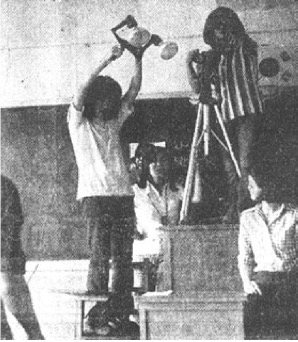
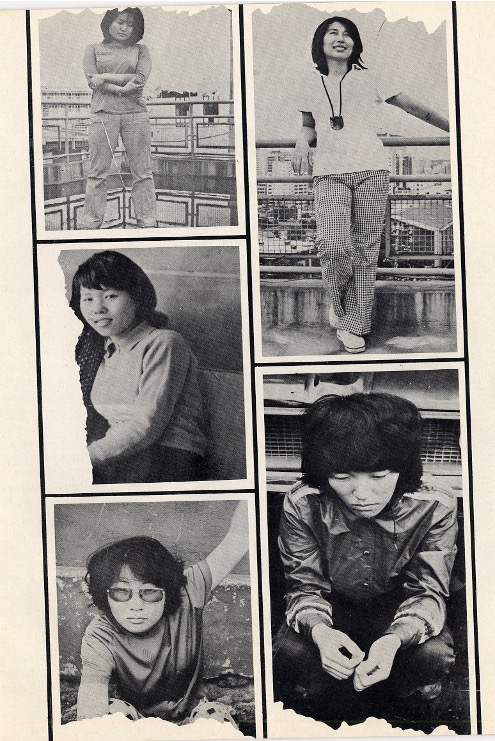
海都電影集社成立於1974年的韓國,在當時的韓國政府推行維新憲法,實施戒嚴並推行反共,政府言論審查加強,是為韓國電影史上的黑暗時刻。在那樣的氛圍下,非主流商業電影界的創作者,有些人會自組獨立電影、實驗電影相關的組織,海都電影集社便是在這樣的背景下成立了。韓國在脫離日本統治後,已經有些導演和團體有在做實驗電影,但正式有一個團體主張要做實驗電影,海都是第一個。可以說,海都是第一個成立的實驗電影集社,名字來源於一名蒙古領將的女兒,根據韓玉姬導演所言,海都太厲害,男子都打不贏她,其終生未婚,以自身的力量與精神在部落中贏得尊重。因此,海都電影集社希望借用這個傳奇女英雄的名字,在以男性及西方為中心的電影界帶來顛覆力量。(註:這裡所指涉的傳奇女英雄名應為忽圖倫,QA時辛恩時老師有稍作解釋)。海都電影集社的成員包括韓玉姬、金点善、李廷姬、韓順愛、鄭妙淑、王圭媛,都是梨花女子大學的學生,而韓玉姬導演便是海都的代表人物,在1974年至1979年之間,擔任海都電影集社的社長。她就讀文學研究所,論文主題是韓國電影裡的詩意美學。王圭媛唸廣播媒體,金点善是唸視聽教育,後來又讀弘益大學,並成為一位知名畫家,現在已過世。李廷姬是韓國文學系,鄭妙淑舞蹈系,海都電影裡的舞蹈都是她編舞的。除了這些創始成員之外,後來劇場評論金芳玉也有參與。
梨花女子大學是當時韓國女性運動中,一直都位處重要位置。需特別補充的是,梨花女子大學在當時雖然已經是非常好的大學了,但學生畢業後仍很難找到正職很好的工作。海都電影集社的成立,定位就是製作有別於主流的韓國電影敘事。在海都成立前,韓玉姬導演曾經參加西江大學的影像研究會的工作坊,在那裡,韓玉姬導演因此遇見金點善導演,兩人都是梨花大學的人,相當投合,決定要成立一個以女性為主的電影社,因此有了海都電影集社,目標是創造不一樣的電影。
第一屆海都放映會
海都電影社的創作方法,其實大部分是各自創作自己的作品,共同製作僅佔部分。1974年7月27日至31日,晚上八點,在首爾一間名為新世界百貨公司的屋頂上,海都電影社舉行了實驗電影節,也就是海都電影集社的第一次公開放映會,因為沒有戲院願意讓他們放電影,所以在屋頂上放映,此為海都電影社第一次的公開活動,除了韓玉姬導演的《Rope》、《三伏犬》之外,還有金点善的《74-A》、《74-B》,李廷姬的《XXOX》,韓順愛的《Over》,最後兩部《Song of Extinction》、《Elevator》則是共同製作,共有八部作品。很不幸的,海都電影集社目前倖存的拷貝就只剩今天能看到的這些作品。節目單上也可以看到,除了這八部片之外,還有韓國小型映畫同友會的8mm作品、梨花大學視聽教育中心的16mm作品這兩部片一起參展。
補充一下韓國小型映畫同友會,它是由兪賢穆主導,兪賢穆是韓國電影史上以寫實主義手法著稱男導演,知名作品如《誤發彈》(1961),以及現存最早期的實驗短片《手》(1967)。兪賢穆很支持海都電影集社,也提供韓玉姬很多協助,他不僅免費出借製作公司的拍攝器材、場地,當韓玉姬在拍攝時因「妨害治安行為」的罪行遭到警察和韓國中央情報部逮捕時,也是他去拜訪警察拜託他們釋放韓玉姬。

放映會的傳單上,也可以看見名為畢卡索的咖啡店的廣告,這是前衛藝術家鄭燦昇的咖啡店,這個藝術家當時與其他行為藝術家如鄭江子、金丘林組成了一個行為藝術團體「The 4 Fourth Group」,透過「偶發」(happening)來做前衛藝術,該咖啡店為韓國當時著名的前衛美術家聚集地。可見當時,並不是只有女性團體在支持實驗電影,也有許多前衛藝術家、地下藝術家加入支持此類型電影的影展。放映會的手冊上,也引用了成員的話,其中可以找到提出《第七藝術宣言》的意大利詩人和電影先驅卡努杜(Ricciotto Canudo),以及阿貝爾・岡斯(Abel Gance)、白南準的名字,其中白南準與韓玉姬的先生姜碩熙有很密切的關係,姜碩熙是南韓電子樂先驅,也是1970年代相當重要的作曲人,《未刪減版》內所收錄的電子音樂便出自於他。
海都電影社成員在1974年的某次訪談,曾提到:「韓國電影有兩種成見:一、它是男性的職業。二、必須有票房保證。」因此,希望能打破這兩個成見。
第二屆海都放映會
第一次的放映會舉行後,韓玉姬、金点善、李廷姬皆有持續創作,並在第二次放映會時播放(1975年,在駐韓德國文化中心(Goethe-Institut)舉行)。在放映會前一個月,1975年4月19日,海都電影集社在美國新聞處(美新處)舉辦了論壇,題目是「女性和電影世界」。
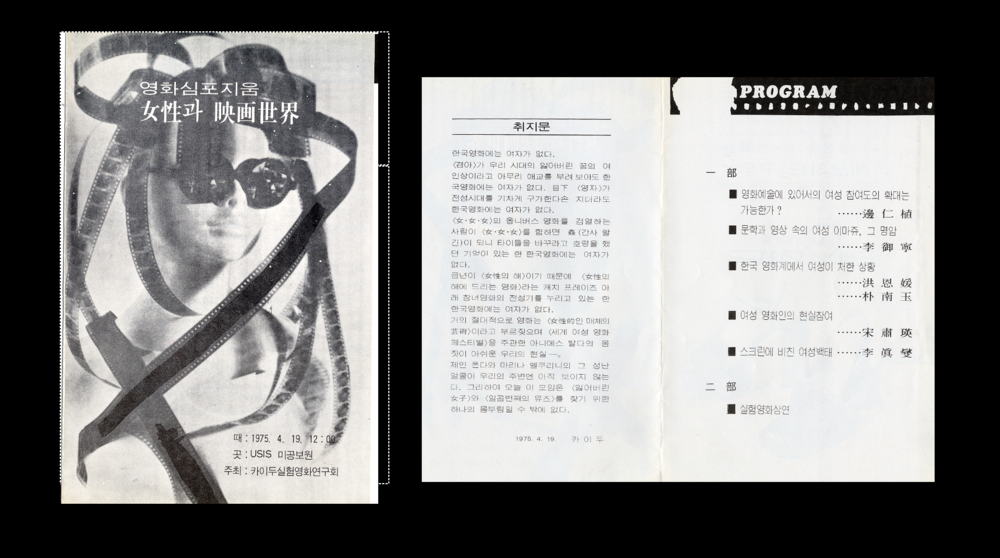
補充一下,1970年代的韓國,電影審查格外嚴格,外國的新聞處、文化中心、文化館等地較容易上映外國電影、不受審查的電影,那海都電影社與德國文化中心(Goethe-Institut)有這樣的淵源,第二次的放映會也在那邊舉辦。
文宣上第一句就寫道「韓國電影沒有女性」,這句話其實是回應當時的某個電影事件,有一部片由多位創作者合作完成,稱作《女女女》,結果在審核過程中,因其片名所指涉三個女性,合起來就是「姦」字,不太好聽,而被迫改名為《女》。因此,在文宣上就寫了「韓國電影沒有女性」如此直接的宣言,並且希望韓國電影中也能出現像安妮華達、梅蓮娜・麥葛麗(Melina Mercouri)、珍・芬達(Jane Fonda)這樣的女性,並在韓國電影中看見女性生氣的面孔。上面也可以看到朴南玉(1955年《未亡人》導演)跟洪恩遠(1962年《女判事》導演),兩位都是南韓電影的女性先鋒,分別是第一、第二位拍攝商業劇情長片的南韓女導演,兩人的講題是南韓電影的女性處境。由此可觀察到,海都電影社所關注的不只是實驗電影,絕對不是一個小眾的議題,則是擴及更大的主題,談論整個女性電影人在電影界的角色。
關於韓玉姬導演
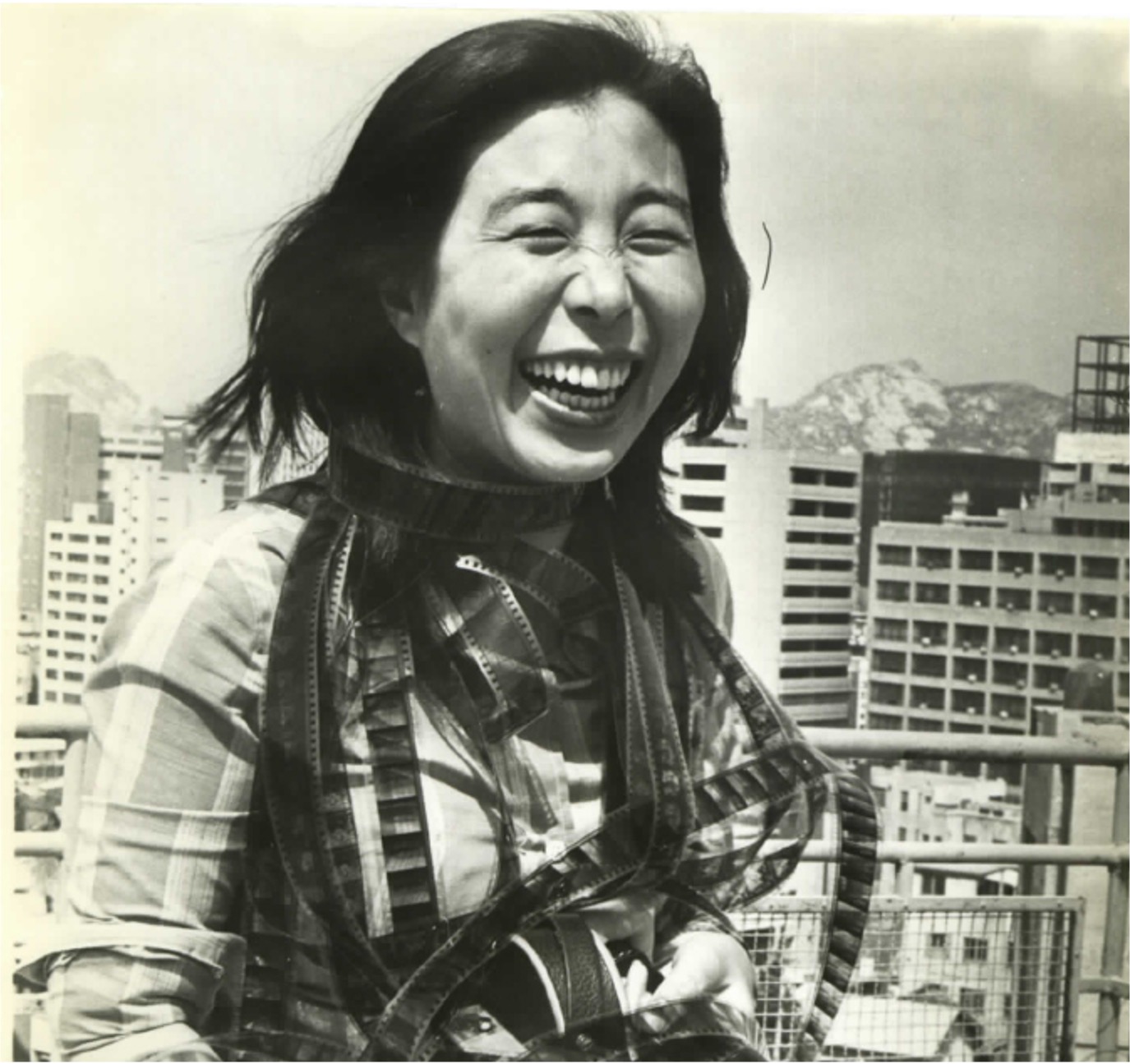
韓玉姬導演目前75歲,她是1948年生,1974年到1979年間作為海都的代表人物,1980年發生光州事件的那一年,曾到德國求學,擔任表演藝術雜誌海外特派員。直到1987年南韓首次有直選總統制,她才回到韓國。韓玉姬導演,除了今天放映的五部,也執導了另外二十多部實驗電影,本次放映短片《色度》在當時政府舉辦的青少年影展中也曾獲獎。她的作品是一直到2019年才被數位化,並在當年多倫多影展放映,也在2022年德國世界文化中心(Haus der Kulturen der Welt)放映。
最後,我在來台之前,有去找韓玉姬導演,她有一段話想要獻給台灣的觀眾:
恭喜第三十屆台灣女性影展開幕。很榮幸也很感謝,我在1970年代製作的五部實驗電影得以上映。在壓抑和僵化的年代裡,這些作品呈現出渴望自由和和平的年輕人煩惱和叛逆。
1970年代拍攝電影不但記錄著我的人生,也是把我珍藏的夢想製作成短片的過程,雖然有時遇到無法跨越的高牆而感到挫折,但那一切都因我在製作電影而感到幸福。
我就像是這個世界獨一無二的獵捕語言的詩人,獵捕著這世上獨一無二的影像,為了找尋那獨一無二的影像而徘徊的路是藝術家該走的路,我也確信那是我所追求的路。
所以我把16mm的攝影機當成機關槍背在身上,奔跑在熱騰騰的柏油路上、明洞的街道上,拍攝街道上的人群,也曾因拍攝禁止出入的地區而受到國家安全部的關切。只因我認為比起不做出行動的理性,用全身抵抗的勇氣更加珍貴。
(辛恩實老師補充:導演當年曾因為拍攝電影而被以妨害風化罪名逮捕,因此顯得她給予台灣觀眾的最後幾句話,更顯珍貴。)
QA
Q:短片《未刪減版》中,剪刀插到牆上流血的畫面有何涵義?
A:剪刀象徵很多事情,是對國家審核刪減的抗議,也是剪輯方面不可或缺的工具,以人偶為比喻代表,剪輯的片段,因此剪輯行為會噴出鮮血,剪刀也代表女性能量潛力是有力量且驚人的。
Q:關於「海都」這個名字,您剛剛有介紹此來源。然而,海都應為歷史上傳說中女豪傑的父親名字,本名應為「忽圖倫」,而非「海都」,因此好奇為何會有這樣的誤植?
A:我其實也很好奇,但這個「海都」名字的來源說明是源自於韓玉姬導演親自對外說明的對話內容。其實那個年代,南韓在國際上是比較孤立的,不太能去國外旅行。她是從較為保守的報紙《朝鮮日報》的專欄作者李圭泰得知相關資訊,也有可能當時就已經有資訊誤植的情況,但這部分的細節我還沒有再另外去求證。更重要的一點,還是回到她們對於這樣一個亞洲出身女豪傑形象的嚮往。
Q:1975年的論壇舉辦是在美新處,是否能談談美新處與韓玉姬導演的關係?
A:1970年代的韓國,電影審查格外嚴格,因此美新處、Goethe-Institut、the French Institute Alliance Française等地都是不用通過政府的審核,也比較能讓自己的作品完整呈現的地方。對於南韓藝術家而言,是一個可以在軍事統治下享有一點創作自由之處,因此也較容易上映外國電影、不受審查的電影。因此,不是只談韓玉姬跟美新處之間的關係,而是整個電影界的狀態。當南韓電影體制還未成熟之前,美新處就已經在雇用南韓的導演。甚至在韓戰期間,美新處可以說推了南韓電影一把。例如很有名的《下女》導演金綺泳,他於1953年的短片作品《I’m a truck》(나는 트럭이다)便是他為美新處工作而拍攝的,後續1955年又拍了《The Boxes of Death》(죽엄의상자)。那個年代的美國,的確是有點在殖民韓國的狀態,但同時又保障了一些藝術家的創作。這樣的情況在光州事件發生的時候,有造成很大的反彈。因為光州市民當初是相信美國會保護人民,沒想到美國默許全斗煥政權的軍事政壓,最後很多市民遭到濫殺。因此,1980年代的大學生再也不相信美國了,1982年甚至有發生火燒美國文化院的事件發生。那韓玉姬導演也差不多在那個時間點前往德國。
Q:我很好奇第一屆實驗電影放映為何是在百貨公司頂樓?而非一般可能會想像到的藝廊,或其他替代空間?百貨公司頂樓應該還是需要通過百貨公司的審核?以及一般觀眾是可以自由上頂樓的嗎?
A:因為影片涉及裸露、血,戲院是絕對無法上映。新世界百貨公司是三星的,目前仍是很大的百貨公司。主要顧客對象是中產階級女性,或許百貨公司方認為梨花女子大學是很好的目標群眾,所以答應放映。加上百貨公司非戲院空間,因此不受審查所限。最一開始有提到的西江大學的影像研究會會在咖啡廳舉辦活動,畢卡索咖啡廳則是場地太小。海都電影社,在當時尤其是在前衛藝術圈、實驗電影圈是造成轟動的,因此有擔心台子會不會坍掉那樣的盛況。可能也出自這樣的擔心,第二次的放映就移師到美新處、德國文化中心這些地點進行。
Q:1970年代海都」電影集社已經對於影視產業裡的女性處境有所關注,並邀請朴南玉、洪恩遠參加論壇,當時是否已經對於「女性電影」在韓國的脈絡具有高度意識呢?朴南玉、洪恩遠與當時的南韓實驗團體又有什麼樣的關係?
A:女性電影在韓國電影脈絡的重新檢視與協商,就如在台灣,是到現在才真正發生的。之所以朴南玉、洪恩遠和海都電影集社能有種相互結盟的可能,其中的原因可能歸因於當時的女導演實在太少了。在林順禮(YIM Soon-rye)於1990年代中期出現之前,韓國電影影史中商業電影的體系裡僅出現過五位女導演。其中,第一位女性導演朴南玉自1955年拍出首部長片作品後就不再拍片,後擔任1960年開始運作的「Cinema Fan」的雜誌編輯(她曾在光復前於大邱擔任報紙記者時撰寫過影評)。經歷戰後的紛亂告一段落,她也不再有機會拍電影。影史上第二位女導演洪恩遠只有拍出三部商業片,但我認為她之所以會認識海都電影社,是因為她沒有完全離開電影界,直到海都電影社出現前,她仍有擔任共同撰寫、改編或參與其他男導演的電影。至於一直致力於支持實驗電影的男導演實驗電影人兪賢穆,他的例子則展現了商業電影與實驗電影的交會,但這樣的現象在當時並非少見,其中一個原因可能歸因於兩者對於威權統治對於創作自由打壓的反抗。
*以下英文講稿由辛恩實老師提供 The following are kindly provided by Eunshil Shin.
In South Korea, The 1970s were politically an era of oppression when the Reformation (Yushin) Regime(Martial Law) strengthened national control with the Yushin New Constitution, anti-communist ideology, and economic development ideology.
Although the government put forward the cause of protection and fostering in the film Industry, the substance of the Cinema, the intervention in production and censorship through the KOFIC(Korean Film Corporation) was done. It was a dark time but, unlike the commercial film industry, which was taking its direction, “the small film movement”(independent) activist and experimental film groups resisted the uniformity of popular films, attempting to break through the oppression of the times with films.
KAIDU Club was organized in this atmosphere. It is a Korean women's experimental film collective founded in 1974. Since the liberation from Japanese occupation, Korean film history gave the name "Experimental Film Collective" for first time to KAIDU club in Considering the context of Korean experimental film history, though Since 1960s, there were some film collective or directors’ works under the influence of international experimental film history.
According to the testimony of director HAN Okhi, the representative of KAIDU, in that time they heard that KAIDU is the name of Mongolia's legendary female hero, as Genghis Khan's maternal granddaughter, she is said to have lived single because no man could outdo her. The name of the female hero who inherited Genghis Khan's blood, who built the Mongol Empire, was an expression of the will to overthrow the contemporary film industry, which consists of Western and male-centered structures (But the real name of this female hero is Khutulun).
The KAIDU Club was formed mainly by female college students, and its early members were HAN Okhi(韓玉姬), KIM Chom-seon(金点善), LEE Jung-hee(李廷姬), HAN Soon-ae(韓順愛), JEONG Myo-sook(鄭妙淑), and WANG Gyu-won(王圭媛). Theater critic KIM Bang-ok金芳玉 also participated later. HAN Okhi served as representative of KAIDU and graduated from Ewha Womans University's Korean
literature department and graduate school after writing a thesis about Aesthetics in Movies, Especially Poetic Expression. WANG Gyu-won graduated from Ewha Womans University with a degree in journalism and broadcasting. KIM Chom-son graduated
from Ewha Womans University's audiovisual education department and majored in painting at Hongik University Graduate School before becoming a famous painter. LEE Jung-hee graduated from Ewha Womans University's Department of Korean Language and Literature and JEONG Myo-sook graduated from Ewha Womans University with a degree in dance, She also choreographed KAIDU's work.
All the members of the KAIDU club, they were from Ewha Womans University(which is always one of the center of women's movement in Korean history) in common.They wanted to make a film different from an established female melodrama.
Prior to KAIDU, there was a “Moving Image research Collective" (影像硏究會) centered on Sogang University's students mostly. Here, HAN Okhi did film Workshops and made some film works, met Kim Chom-son and then organize KAIDU together.
From July 27 to 31, 1974, KAIDU’s experimental film festival was held on the roof of the Shinsegae Department Store of Seoul at 8 p.m. This event was KAIDU’s first public activity. According to Han Okhi's testimony, the festival was held on the roof of the department store because the existing movie theater could not be rented.
At that time, there were eight films, including Han Okhi's "Rope", "The Middle Dogs Day" (4 minutes), Kim Chom-seon's "Film "74-A" (12 minutes), Lee Jung-hee's "XXOX" (8 minutes) and Han Soon-ae's "Over" (6 minutes), co-produced "Song of Extinction" (5 minutes), and "Elevator" (3 minutes). Then the programs screened with the films of the KAIDU members were 8mm works by the Korean Small Film Club (韓國小型映畫同友會) and 16mm works by Ewha Womans University's Audio-visual Education Center was projected, too.
The "Small Film Club"s Supported by 兪賢穆Yoo Hyun-mok, a male director who is one of masters of Korean realist films such as Aimess Bullet(1961,誤發彈) and made the oldest existing Korean experimental film short “Hand(1967,手). Director Yoo Hyun-mok is known to have supported KAIDU and Han Okhi a lot. He allowed to use his production company’s camera and studio free of charge for KAIDU, and he visited the police to persuade them to release when Han Okhi was arrested by the police during her filming and by the Korean Central Intelligence Agent because of allegations of disorderly conducts.
There is also an advertisement for a cafe named Picasso run by Chan S. Chung(鄭燦昇). Born in Seoul in 1942, artist CHUNG formed the performance art group with JUNG Kangja(鄭江子), and KIM Kulim(金丘林) (Director of “1/24 second meaning”, 1969) and led the Korean avant-garde art by conducting "happening" several times.
Comments on the right mention Ricciotto Canudo, who defined film as the seventh art, and Abel Gance, the main director of early film history, as well as Nam June Paik, who was close to the late Sukhi KANG(姜碩熙), who was also a husband of HAN Okhi and a pioneer of Korean electronic music, and also worked as an important film music composer in the 1970s. He composed the music for “Untitled-77 A.”
"There are two prejudices in the film domain, It is related to the notion of a man's profession and box office success. We will break these two stereotypes as outsiders," it said in a 1974's press interview of KAIDU's members.
And HAN Okhi, KIM Chom-Son Kim, LEE Jung-hee continued their film works and they also screened their new works at the second work presentation at Goethe-Institut on May 1975.
And they held a Symposium titled “Women and World of the Cinema” at the United States Information Services (USIS) one month before of their second festival. In fact, USIS effectively launched the South Korean film industry during Korean War (for example, KIM ki young(金綺泳)’s short “I’m a truck(1953, 나는 트럭이다) was made for USIS.
For South Korean artists in the 1970s, the USIS, the French Institute Alliance Française, and Goethe-Institut were exceptional places to enjoy freedom of expression under the military dictatorship. Later, however, two years after the Gwangju Uprising in 1980, their junior college students set fire to the Busan American Cultural Center. Gwangju citizens expected the U.S. to play a forward-looking role during the Gwangju U.S.
uprising, but the U.S. government sided with Chun Doo-hwan's new military dictator ships, which slaughtered civilians.
In an introduction to this symposium, KAIDU said, "There are no women in Korean movies. And they say they want to find Agnes Varda's gestures, Melina Mercouri and Jane Fonda's angry faces in South Korea.
At the symposium, South Korea's first woman feature film director, PARK Nam-ok(朴南玉), the director of “The Widow” (1955,未亡人) and second woman director Hong Eun-won(洪恩遠), (director of “A Woman Juge” (1962,女判事) presented "The Situation of Women in Korean Film."
HAN Okhi, who worked as the representative of KAIDU until 1979, went to Berlin Free University in Germany in 1980, the year of the Gwangju Uprising, and returned to South Korea in 1987 only when the new military dictators promised a direct presidential election and institutional democratization progressed. She is the only surviving member of KAIDU who is still working on films.
Toronto IFF's presentation and 2022 No Master Territories - HKW Haus der Kulturen der Welt's Program book. These are the new international spotlights of KAIDU's works after they were digitized in the 21st century. Here are HAN OKhi’s words for Taiwan public of the WMWIFF:
Congratulations on the 30th Women Make Waves Int.FF, I am deeply grateful for the honor of showing five experimental films. I made in the 1970s. These works are based on the repressed, rigid society, and the dismal political situation that was in at the time. It shows the anguish and defiance of young people who longed for freedom and peace.
Making 1970s movies is also a record of my life, with the work of making a video of the short stories of my dreams that I have kept. Sometimes, I was frustrated by the barriers that I couldn't jump over, I was happy with the fact that all those moments were made movies.
Like a poet, a hunter of the only language in the world, Hunting the only image in the world, I had a strong urge to show the audience. I was sure that the only way to search for an image was the artist's path, and that was the path I pursued.
So I put a 16-millimeter camera on my back like a machine gun, ran around Myeongdong Street on hot asphalt, photographing street figures and off-limits I was called to the Korean Central Intelligence Agency. The courage to resist with the whole body seemed more valuable than the inaction intelligence.