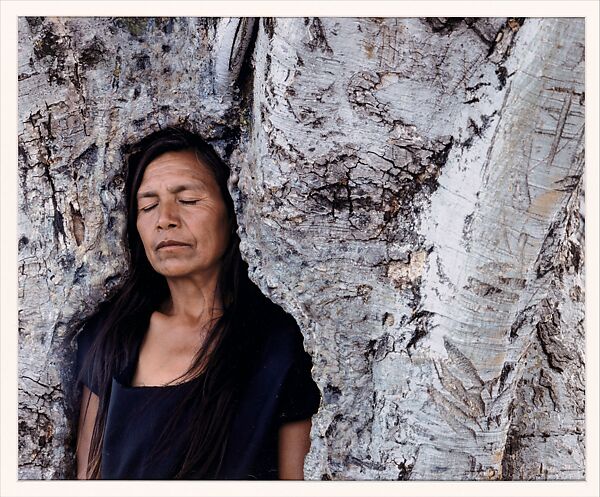
An Iranian-bom artist who has lived in the United States since 1974, Shirin Neshat portrays the emotional space of exile in her photographs and hims. She questions the role of women in Islamic society, recognizing the tensions between a collective cultural identity and one driven by individual concerns. Neshat uses the chador, the head to ice islamic covering that is mandatory for women in iran, as an icon for repression and female identity. Passage (2001) was commissioned by composer Philip Glass, whose orchestration rhythmically underscores the ritualized movements of the funerary preparations and procession that are the film's subjects. Neshat's panoramic shots of the landscape provide an epic backdrop for the two throngs preparing the funeral: men carry a shrouded corpse across sand dunes, and chador-covered women dig a grave with their hands. Eventually, the actions of the men and women move from the ritual to the elemental as repetitive movements give rise to dust, sticks, stones, and fire, which form a metaphoric circle of life, death, and the hope of renewal.