No English Content Available

Resisting Paradise
■ Content Resisting Paradise 2003 | USA| Documentary | Color | 80min | English Renowned documentarian and filmmaker Barbara Hammer has crafted an eloquent and richly layered examination of the artist’s and individual’s role in times of conflict. Resisting Paradise focuses on Henri Matisse and Pierre Bonnard’s artistic work in the south of France during World War II, while also examining the word of Matisse’s family and others in the French Resistance Movement. Featuring captivating interviews with former Resistance workers Lisa Fittko (who smuggled Walter Benjamin out of France), Marie-Ange Allibert, and Matisse’s grandchildren, rare archival footage, and lush cinematography referencing the painters’ styles and the rich landscape of the Provence of France, Resisting Paradise is a compelling look at the intersection of art and life in complex times.” ■ Filmmaker Barbara Hammer Barbara Hammer was born on May 15, 1939 in Hollywood, California. She is a visual artist working primarily in film and video. She has made over 80 moving image works in a career that spans 40 years. She is considered a pioneer of queer cinema. ■ Product Information Distribution: Taiwan Women's Film Association Content: Resisting Paradise Subtitles: Chinese/English Format: DVD
Dream Girls
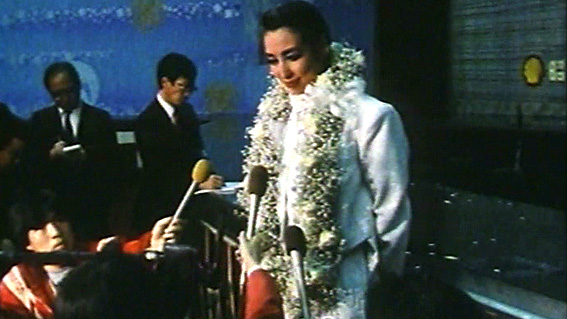
■ Content Dream Girls Kim Longinotto / Jano Williams | 1993 | UK | Documentary | Color | 50min | Japanese This fascinating documentary, produced for the BBC, opens a door into the spectacular world of the Takarazuka Revue, a highly successful musical theater company in Japan. Each year, thousands of girls apply to enter the male-run Takarazuka Music School. The few who are accepted endure years of a highly disciplined and reclusive existence before they can join the Revue, choosing male or female roles. DREAM GIRLS offers a compelling insight into gender and sexual identity and the contradictions experienced by Japanese women today. ■ Filmmaker Kim Longinotto Kim Longinotto (born 1952) is a British documentary filmmaker, well known for making films that highlight the plight of female victims of oppression or discrimination. Longinotto studied camera and directing at the National Film and Television School in Beaconsfield, England, where she now tutors occasionally. Longinotto was born to an Italian father and a Welsh mother; her father was a photographer who later went bankrupt. At the age of 10 she was sent to a draconian all-girls boarding school, where she found it hard to make friends due to the mistress forbidding anyone to talk to her for a term after she became lost during a school trip. After a period of homelessness, Longinotto went on to Essex University to study English and European literature and later followed friend and future filmmaker, Nick Broomfield to the National Film and Television School. While studying, she made a documentary about her boarding school that was shown at the London Film Festival, since when she has continued to be a prolific documentary filmmaker. Longinotto is an observational filmmaker. Observational cinema, also known as direct cinema, free cinema or cinema verite, usually excludes certain documentary techniques such as advanced planning, scripting, staging, narration, lighting, reenactment and interviewing. Longinotto’s unobtrusiveness, which is an important part of observational documentary, gives the women on camera a certain voice and presence that may not have emerged with another documentary genre. She has received a number of awards for her films over the years, including a BAFTA for her documentary Pink Saris. Jano Williams Jano Williams went to Japan in 1974 intending to stay one year and didn’t come home for 14. While there she worked at the Japanese Broadcasting Corporation NHK, her work involved the making of radio programs about the individuals and structures that make up Japanese society. She subsequently moved to the television company NTV. She learned Japanese and became totally immersed in the Japanese way of life and contributed many articles to Japanese newspapers and magazines. A year after her return to England she went back to Japan with Kim Longinotto to make EAT THE KIMONO (1990) about the radical woman performer Hanayagi Genshu. This was followed by DREAM GIRLS (1993) about the all women Takarazuka Dance Theatre and then SHINJUKU BOYS (1995) about young transsexual men who had been born with women’s bodies. Subsequently she went back to film in Japan for another production company in the course of which she first met the Gaea girls. She is now living in Bristol and hopes to continue making films about the Japan that reflect her bond with that country. (09/09) ■ Product Information Distribution: Taiwan Women's Film Association Content: Dream Girls Subtitles: Chinese/English Format: DVD

蜥蜴の尻っぽ とっておき映画の話
Born in Tokyo in 1927, for half a century, from Rashomon (1950) to Madadayo (1993), Teruyo Nogami stood by Akira Kurosawa as a script supervisor and principal assistant. She was 23 years old when Kurosawa made Rashomon. Altogether, she has worked on 20 films and spending almost half a century working with the world famous Kurosawa, supporting by his side, and was so indispensable that she was described as "my right hand" by Kurosawa. She is also the author of Waiting on the Weater: Making Movies with Akira Kurosawa, Kabei, Our Mother, which was an autobiographical novel about her own childhood and was made into a film by director Yojoi Yamada, starring Sayuri Yoshinaga. *To know more about Japanese female film professionals behind the scenes, please check out here.
Women・Imagery・Books
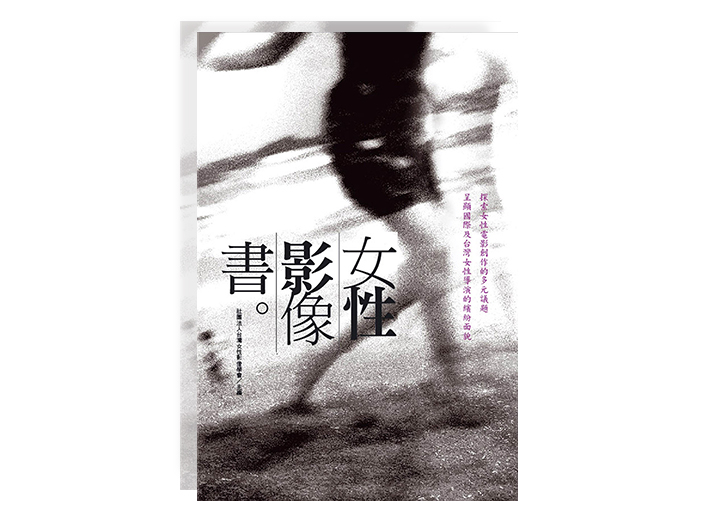
■ Content This book introduces three categories of female directors: internationally important, new and notable Taiwanese female directors. The book expands its focus to the film text, female creative behaviour and their environment by exploring the themes. Furthermore, “Women‧Image‧Book” not only includes the film lists of Women Make Waves Film Festival but also provides relevant websites and books as the appendix. In the West, many feminist and independent filmmakers in the 70s were dancers. For example, Sally Potter and Yvonne Rainer were both dancers and choreographer before making films. Male film critics have described the camera as a metaphor of pen, however, if we think about the relationship between foot and camera, then what will the camera be?
Women Look at Women
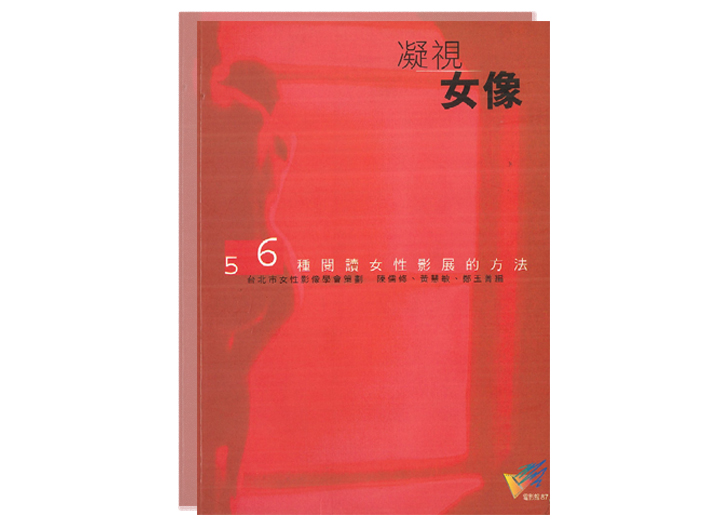
■ Content From WOMEN AND IMAGE published in 1994 to WOMEN LOOK AT WOMEN, women's issues are no longer unknown to the society. Examing from the perspective of social benifit, policy-making process, and academia, women's need is taken into consideration. Nevertheless, that doesn't mean the whole procedure was smooth and peaceful. One can never neglect the painful process- all kinds of movements and protests and unresolved law suits. What really matters is to realize the importance of continuing this revolution, and recognize the mission of WMWFF, and rethink the definition of Women's film festivals. That is also what this book trying to achieve, by providing different ways of looking women's films, women's film festivals and women's issues.
Women and Image
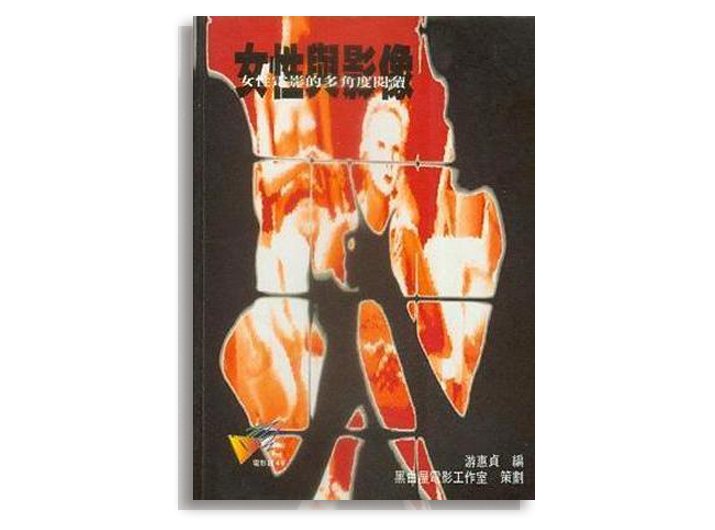
■ Content Edited by Jane H. C. YU, WOMEN AND IMAGE examines 37 woman films directed by female directors, with a strong attempt to bring out female voice within the bigger spectrum of film discourse in Taiwan. WOMEN AND IMAGE has altogether 7 chapters: BODY, GENDER, MEDIA, PEOPLE, MOVEMENT, SOCIAL DISCOURSE, EXPERIMENTAL and THEORIES, including articles by film critic, film professionals, professionals from social and cultural criticism, and etc.